Sabarimala Ayyappa Temple Mandala / Makaravilakku Kalam Pilgrimage
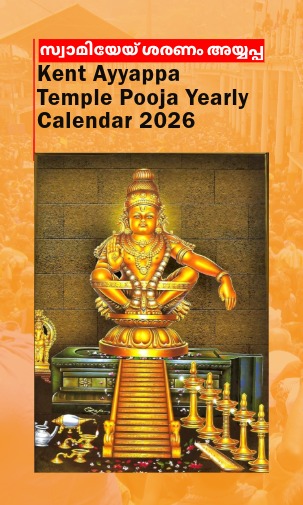
Swamy Saranam Ayyappa
Sabarimala Ayyappa Temple Mandala/ Makaravilakku Kalam Pilgrimage
Sabarimala Mandala–Makaravilakku Poojas 2025–26
This year’s Sabarimala Mandala–Makaravilakku poojas will commence on November 16, 2025, at 5 PM, with the ceremonial opening of the temple. The Devaswom Board has made maximum efforts to ensure the best facilities for devotees this year.
Below are the details regarding the temple opening schedule and special poojas:
Temple Timings
(from Vrischika 1 – November 17)
Morning: 3:00 AM – 1:00 PM
Evening: 3:00 PM – 11:00 PM
(till Harivarasanam)

Daily Schedule:
Morning:
Opening of temple: 3:00 AM
Nirmalyam & Abhishekam: 3:00 – 3:30 AM Ganapathi
Homam: From 3:20 AM Neyyabhishekam: 3:30 – 7:00 AM
Usha Pooja: 7:30 – 8:00 AM Neyyabhishekam: 8:00 – 11:00 AM
25 Kalasham, Kalabham: 11:30 – 12:00 Noon
Noon:
Ucha Pooja: 12:00 Noon Temple Closing: 1:00 PM
Evening:
Temple Opening: 3:00 PM
Deeparadhana: 6:30 – 6:45 PM
Pushpabhishekam: 6:45 – 9:00 PM
Athazha Pooja: 9:15 – 9:30 PM
Harivarasanam: 10:45 PM
Temple Closing: 11:00 PM
Offerings and Bookings
Online booking for Ganapathi Homam, Ashtabhishekam, Neyyabhishekam, Usha Pooja, Ucha Pooja, Nithya Pooja, and Pushpabhishekam has started. Devotees can also purchase tickets directly for offerings at the temple. Online Virtual Queue Booking is open. Real-time booking counters are being arranged at Pamba, Nilakkal, Erumeli, Vandiperiyar, and Chengannur.
A total of 80,000 devotees will be allowed through online booking and 20,000 through real-time booking each day. If an online booking is cancelled, that quota will automatically move to the real-time booking pool, ensuring darshan opportunities for all.

Facilities for Devotees
- Biscuits and medicated drinking water will be provided to devotees throughout the queue system.
- Special queue arrangements and quick darshan facilities are available for young women and children before the 18 Holy Steps (Pathinettam Padi).
- A special Vigilance Monitoring System has been set up to prevent exploitation by dolly workers.
- Annadanam Mandapam (free meal hall) at Malikappuram will serve delicious food to devotees throughout the festival.
- A 24-hour free physiotherapy center will function at Sannidhanam for devotees suffering from leg or body pain after the climb.
- Off-road ambulances will operate round the clock at Pamba and Sannidhanam, and a stretcher service under the Fire Force will also be available.
- Senior and experienced officers from various departments like Police, Revenue, and Health are coordinating the arrangements.
Important Dates:
Mandala Pooja Date: December 27, 2025. The temple will close after the Harivarasanam at 10:00 PM on this day.
Makaravilakku Reopening: December 30, 2025, at 5:00 PM.
Makaravilakku Date: January 14, 2026. The Makaravilakku procession (Ezhunnallippu) will be held at Malikappuram every night from January 14–18.
Padi Pooja: Begins on January 15, 2026. Performed till January 19, 2026.
Kalabhabhishekam: January 18, 2026 (Morning):
Conducted at the Palace division (Kottaram Vaka). After this, Neyyabhishekam will not be performed.
Malikappuram Guruthi Pooja: January 19, 2026 (Night): Guruthi Pooja at Malikappuram. No other offerings will be conducted.
Temple Closing: January 20, 2026 (Morning): Darshan will be allowed only for the Palace Representative (Kottaram Prathinidhi) after which the temple will close. The world-famous Sabarimala Ayyappa Temple in Kerala remains continuously open only during the famous Makaravilakku – Mandala Pooja season (November – December – January).
The two month pilgrim season, popularly known as Mandala Kalam, attracts millions of devotees to this hill shrine dedicated to Sastha or Ayyappa. The annual pilgrimage begins in mid November and ends in mid January with the Makaravilakku.
The Sabarimala Ayyappa Temple is located in the forests of the Sabari Hills of the Western Ghats at an altitude of 914 meter. Pamba is the important base camp on the way to Sabarimala temple and from here one has to trek 5 km to reach the temple.
A pilgrim visiting the Sabarimala Ayyappa temple during the Mandala Pooja period observes certain austerities for 41 days. The pilgrim should abstain from non-vegetarian habits, should not indulge in sex and should wear the special Rudraksha or Thulasi mala.
Some people don’t shave or cut their hair during the period. Some ardent devotees only wear black or saffron dress and avoid wearing footwears. Pilgrims set out in groups and each carry the Irumudikettu, a cloth bundle containing traditional offerings to the temple which includes coconut, ghee, malar, rice etc.
People of all religions can visit the Sabarimala temple and there is no restriction of caste or creed.
Women between the ages of 10 and 50 do not visit the Sabarimala temple.
Free food is provided during the period in Pampa, the base camp before the trek to the temple.
The Story of Ayyappa
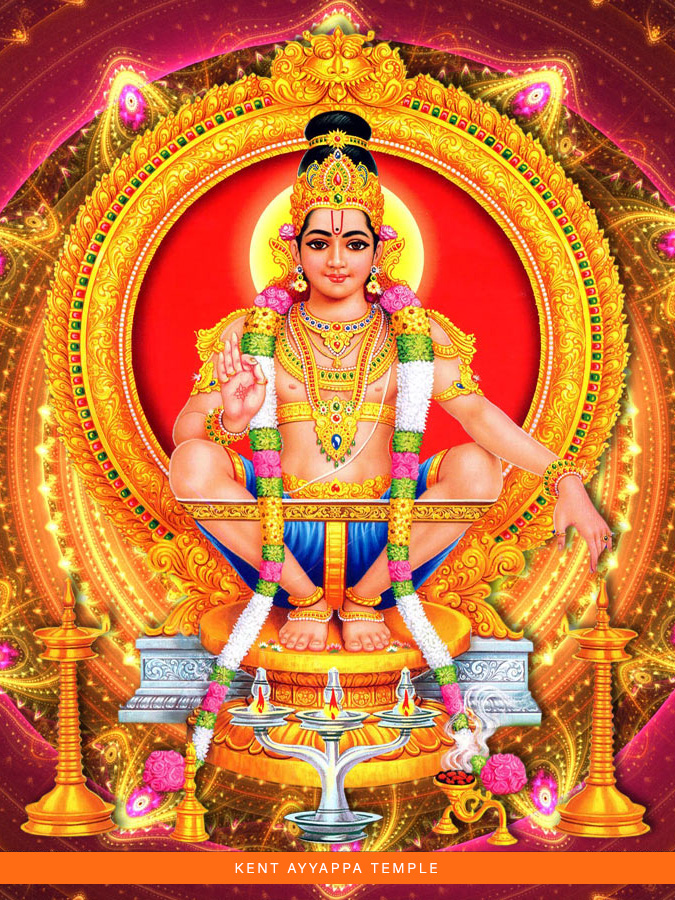
Lord Ayyapan or also called as just Ayyappa, is the Hindu God worshipped mostly in the southern part of India. Ayyappa is also known as ‘Hariharan Puthran’ and ‘Hariharaputra,’ both of which translate to the son of both ‘Hari’ (Vishnu) and ‘Haran’ (Shiva). He is known to be born out of the union of Lord Shiva and Lord Vishnu who was in his only female form, Mohini. This explains his divine powers which are a combination of the powers of both Lord Shiva and Lord Vishnu. The world-famous temple in Kerala’s Sabarimala needs no introduction. It is dedicated to the worship of Lord Ayyappa who is also called Manikanta.
Boon to Mahishi & Bhasmasura
Mahishi was the sister of the asura named Mahishasura. In her previous birth, she was the wife of Dattathreya who was the incarnation of the trimurthis. Over her actions, Dattathreya once cursed his wife Leelavati to take birth as Mahishi as the sister of Mahishasura. After birth, she was made the Queen of Asuras.
Her brother Mahishasura was once blessed with the boon of invulnerability to all men. However, he went to create a ruckus in the three worlds and hence the Devas combined their powers to create Goddess Durga. She in turn killed the deadly asur, Mahishasura. It is through this incident that Goddess Durga is called Mahishasura Mardhini (The woman who ended Mahishasura). The death of her brother left Mahishi furious that all the Gods have plotted to kill her beloved brother. In anger, she began to perform a Tapasya to please Lord Brahma. She was given the boon of ruling the universe and being invulnerable except to a being that had not been born from a woman’s womb. Such a being never existed and hence left her arrogant. She hence began conquering and plundering the world.
Meanwhile, an asura named Bhasmasura was blessed with any boon he wished, from Lord Shiva. Bhasmasura asked for the boon that anything and everything he touched would burn into ashes. Lord Shiva gave him the boon he wished for. Later on, he wanted to test his boon on Lord Shiva. This left Lord Shiva worried and he had Bhasmasura after him trying to test the power of his boon. Lord Shiva then called for the help of Lord Vishnu and hid himself in the inside of a Peepal tree while Bhasmasura was in search of him. Upon learning about these series of events, Lord Vishnu took the form of a female named Mohini. Mohini literally means enchanting woman. Lord Vishnu is said to have done so in an attempt to stop Bhasmasura. At the very sight of Lord Vishnu as Mohini, Bhasmasura fell for her. He tried many ways to impress her. Knowing about his boon, Lord Vishnu as Mohini, asked Bhasmasurs to hold his hand over his head and vow fiercely. As anything he touched was to be burnt into ashes, Bhasmasura was reduced to ashes. This way Lord Vishnu’s lesser popular incarnation as a female, saved Lord Shiva from Bhasmasura.
Union of Lord Shiva & Mohini
Later on, when Lord Vishnu met Lord Shiva, he explains him the whole scene and how Bhasmasura ultimately turned into ashes and that he was then safe. Lord Shiva in delight, asked Lord Vishnu if he could see the form of Mohini. Lord Vishnu then appears as Mohini and this leaves Lord Shiva mesmerized. He instantly falls for her beauty and overcomes his passion. It is believed that the Gods then united and through their union a baby boy was born. The union of the two Gods was called ‘Harihara’ where Hari was Lord Vishnu and Hara was Lord Shiva. This justifies the name ‘Harihara’ to Ayyappa. The baby boy born combined in himself, the powers of both the gods – Vishnu and Shiva. This baby was Ayyappa. He was known to be born for a divine cause. This was to eliminate Mahishi and then become the cause of her attainment of Moksha.
At the Kingdom of Pandalam
The gods placed the baby near the banks of the River Pampa and left to Heaven. Meanwhile, King Rajashekhara who was the childless king of the kingdom Pandalam, was up for a hunt near the river with his men. They then hear the cries of a baby from somewhere near. After searching, they find a beautiful and divine baby boy. It is believed that at this point, a saint appeared and addressed King Rajashekhara. The saint asks him to take the baby to palace and that when the child turns twelve, he would know the divine reason and his history. Saying this, the saint disappears. The King then takes the baby back to his palace and explains how the baby was found to his Queen. The Royal couple was delighted as they had been praying Lord Shiva for a baby and now, they were blessed with a baby. The kingdom was happy to have their heir at last and everything prospered with the arrival of Ayyappa. He was named Manikanta.
Soon after king Rajashekhara adopted Ayyappa, his own biological son Raja Rajan was born. Both the boys grew up as princes. However, Ayyappa grew up to excel at martial arts and Vedas while the Guru himself was surprised at his abilities and other extraordinary talents. He suspected of the divine nature of Ayyappa. After the completion of his studies under his Guru, Ayyappa was to offer Guru-Dakshina (fee to the teacher) to his Guru. The Guru tells him that he himself was blessed having such a divine child as his student. Knowing that Ayyappa was a divine child, his Guru makes a request to Ayyappa. He asks him for the blessing of sight and speech for his blind and dumb son. Just as Ayyappa placed his hand over the head of the Guru’s child, he was blessed with vision and speech.
Such were the powers of Ayyappa!
The Royal Conspiracy & Tigress’ Milk
Out of their two sons – Ayyappa and Raja Rajan, with Ayyappa being the eldest son, King Rajashekhera decided to crown Ayyappa as the next king. However, one of the ministers thought that he was to be crowned next and hence did not want Ayyappa to be the next king. He then devised plans to kill Ayyappa. Despite multiple attempts, he failed to do so. He then goes to the Queen to poison her with bad thoughts. He says that she herself had a biological son and he should be made the next King and not Ayyappa. Together they devise a plan to get Ayyappa killed. The plan was that the Queen had to fake an illness to which the only cure was supposed to be drinking tigress’ milk. Ayyappa was to be sent to the forest and he would then be in danger from the wild animals present there.
The Queen then cried out loudly, as advised by the minister, faked a severe stomach ache and a headache. The plan went on well and Ayyappa was sent to bring the milk of a tigress. The king makes arrangements for the departure of his beloved son. Although, Ayyappa refused to take any troops with him. He was sent with enough food stuff and coconuts with three eyes in the remembrance of Lord Shiva. The Panchabuthas, sent by Lord Shiva, also accompanied Ayyappa to the forest.
He is to have entered the forest for the divine cause that he was born for – the death of the asura princess Mahishi. He then fought a fierce battle with Mahishi and threw her down from the Devaloka (heaven). From there, she fell on the banks of Azhutha River. They clashed again at the Azhutha River. At the end of battle, Ayyappa climbed up on the chest of Mahishi and danced fiercely. Mahishi then understood the divine power that was dancing on her and realised that he was none other than the son of Hari and Hara – Lord Vishnu and Lord Shiva themselves. She realised that it was her end and died. Lord Shiva and Lord Vishnu witnessed this scene from a place Kalakatti and were pleased that Ayyappa, their son, has killed Mahishi and freed the world of her atrocities. After the avenge of Mahishi, Lord Shiva appears and says that there was one more thing left to do. He asked Ayyappa to confront to the King Rajashekara about his identity as he showed the most concern towards him. Lord Shiva told Ayyappa that Lord Indra would accompany him as a tiger. With Manikanta on the tiger and all the goddesses in disguise of tigresses accompanied them to the palace. Seeing the flock of tigers entering the palace, the royal family was terrified and understood the divinity of Manikandan. On seeing this, the Queen and the minister confess of their actions and realised the divine identity of Ayyappa. After this, Ayyappa disappeared from the scene.
The King’s Vision
However, the loss of his son has left the king in despair. He would not eat anything until his son returned back. On one day, the King saw a vision of Ayyappa in his divine form. The king then realised the divine nature of Ayyappa and constantly requested the lord to forgive him for behaviour. He asks for forgiveness from Ayyappa that he saw him as his own son. Filled with emotions of happiness, grief, fear, wonder, a sense of ‘Bhakti’ (devotion to God) and self-surrender invoked in the King. He then stood praying for the mercy and blessings of Harihara. The king asked him to direct him towards the path of Moksha (salvation), free from the worldly ego. The lord then addressed him that he would certainly return back and showed him the path of salvation. He however, told the king that since his life mission had been accomplished, he would have to return to heaven.
The Temple of Sabarimala
The king implored Lord Manikanta to allow him to build a temple and dedicate it to him and the Lord assented. Upon the request of the king, Ayyappapa agreed to get a temple built by the king. Ayyappa shot an arrow that fell at the top of Sabarimala and told the King that he could construct a temple at Sabarimala, north of the holy river Pampa and install His deity there. Ayyappa also explained how the Sabarimala pilgrimage shall be undertaken, emphasizing the importance of Penance, Vratham and what the devotees can attain by His ‘Darshan’. He then blessed the King and all others assembled there, and vanished. The King duly constructed the temple at Sabarimala, dedicated to him. When the construction of the temple was completed, Lord Parasuram sculpted a figure of Lord Ayyappa and installed it in the temple on the day of Makar Sankranti. Thus, was Lord Ayyappa deified. Sabarimala in Kerala is the most famous Ayyappa shrine, visited by over 50 million devotees every year, making it one of the most popular pilgrimages in the world. At the temple of Sabarimala, it is believed that Ayyappa has established a strict religious code of conduct to receive his blessings. First, the devotees would have to observe a 41-day penance before starting their pilgrimage. These devotees should further maintain abstinence from physical pleasures and family ties, and live like a celibate, popularly known as ‘Brahmachari’ in Hinduism. Moving on, the devotees have to walk through their path on foot, bathe in the holy river Pampa, and finally climb up the eighteen stairs to reach the Sabarimala temple. On the fourteenth day of January occurs the Hindu festival – Makara Sankranti or also called as Pongal. Despite the harsh weather conditions, the devotees cross the dense forests and then the steep hills to seek the blessings of the Lord. This day is considered an auspicious day to visit the temple at Sabarimala for pilgrims and devotees across the country. It is believed that it is on this day that the Lord himself is said to descend in the form of light, known as “Makara Vilakku”.
It is believed that Sabarimala is where a part of the lord resides to bless his devotees. This explains the millions of devotees who visit this temple every year with utmost devotion!
Swamy saranam Ayyappa…